It’s an odd experience to sift through all the stuff that remained—that still remains—after my mom died.
It’s been nearly five years at this point, and yet some days I still think of her and must actively remind myself that, oh right, mom isn’t just on a long trip back home.
Or I suppose that’s exactly where she’d gone: on a long trip back home.
—
We’re helping my father downsize. After my dad took the most precious-to-him items to his new apartment, my sister and I are now kind of forced to look through all of my late mom’s stuff.
When my dad moved to this house he just moved out of, my mom had just died. We moved so much stuff over to this house, because there was room in the house. But also because none of us had any emotional bandwidth left for decision making about her stuff.
Even though I think we all knew deep down that a lot of it wasn’t even ever going to get unpacked.
Ironically, last month a lot of it got unpacked just so that they can get packed again.
I got maybe three hours of sleep last night, after I sorted through some of what remained in the house we’re starting to clean up.
As I went through the house by myself in the quiet hours of the weekday night, some tears were shed. Multiple times.
I’ll share why I cried the first time during the night, and spare the details on the rest.
—
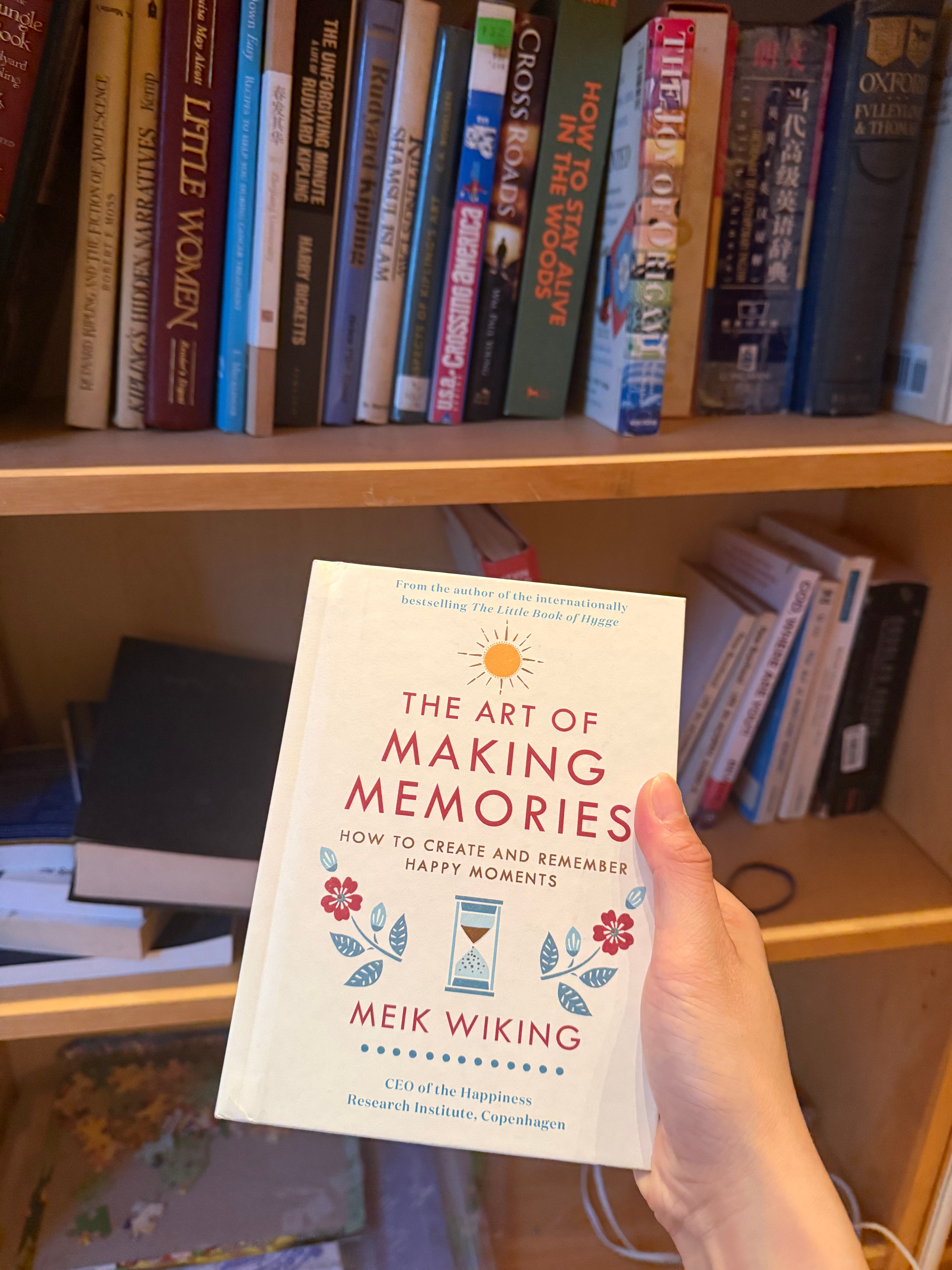
In the office at the front of the house, usually blessed by abundant sunshine, sits the old piano that we migrated from my teenagehood home five years ago. It was also the room where most of the books that belonged to my parents collected dust, on floor-to-ceiling shelves on the opposing wall to the piano.
On some of the shelves sat paintings and framed artwork from my mom. Those I will likely keep. My partner and I have some floating shelves at home where we rotate different art pieces from “the archive.”
There were also a variety of books and book-like items. Cookbooks. Stephen King novels. Beach reads. Memoirs of Chinese authors I didn’t know. An orphaned instruction manual for a kitchen appliance my dad took to his apartment. A map with highlighter marks on it, whose meaning died with my mom. A tiny self-help booklet that I’ve seen around since I was 11. A series of books that collected hundreds and thousands of Pulitzer-winning B&W photographs showing the cruelties and failures of humanity which both shaped and traumatized me as a kid (I’m convinced this was why I wanted to be a journalist for the longest time). Most of these books will likely be donated, some of them I will keep.
There were an entire shelf worth of books on Rudyard Kipling (The Jungle Book) that people very close to my mom—what today would be called her chosen family, I suppose—sent to her when she was doing her Masters thesis. Books that travelled from bookstores in Minnesota to Hangzhou to Ottawa on ships across decades. These books will likely sit at Value Village for a long time before disappearing into obscurity one way or another, their history of worldly travels never known to anyone who walk by.
And on another shelf sat 6 or 7 gigantic binders.
Amidst everything else, it makes no sense to keep them. They contained a combination of Montessori casa program curriculum and philosophy, printed reference materials, personal essays and notes and photographs and art and lesson plans. Most of them are neatly organized and in clear plastic sheet protectors, making them look newer than they are—at this point close to twenty years old.
Like with most things left behind by loved ones who have passed on, it makes no sense to keep them, but still incredibly difficult to get rid of.
These binders are the artifacts of a portion of my mom’s life’s work. A reminder of how hard she worked when we moved to Canada. The efforts of her striving for a better life for all of us. How much heart she poured into her work in education.
And now, all of it will be gone and forgotten. No longer be waiting on the shelf to be discovered and dusted off.
—
I don’t have my mom to hold tight anymore. And the child in me wants so desperately to hold on to any fragment she leaves behind, fearing that they too will fade away, like my memories of her.
But I also know that we can’t inherit all of our parents’ careers. Nor can we inherit their lives and hopes and dreams.
We can’t inherit anyone’s everything.
Because we need the room to build our own. Careers, lives, hopes and dreams.
Sitting on the floor in front of those shelves, with one of those binders open, I was floored by the quiet knowing of what I must do, not just today, but all the tomorrows too.
And what is it that I must do?
I must let go of artifacts like these binders, mementos of my mom’s interrupted life.
And it doesn’t stop there. At the binders. At today.
Most of us don’t have the heart to get rid of everything all at once. And so what we decide to keep today gets shed tomorrow, because life is for the living.
So I must let go of her, fragment by fragment, for the rest of my life.
It’s a very sad and painful conclusion, I know. And yet the long tail of grief is a bittersweet reminder of the love I still carry for her.
The long tail of grief is the love I carry for her.