

This was a piece I wrote for an in-class blog for a course I did almost a year ago, and the topic interests me quite a lot, since I haven’t posted anything on this blog for a long time, I thought I could edit it and post it…
“A city is an ecological system whose existence, character, and well-being are defined by the ongoing interaction among competing and yet at times complementary forces.” (Lum and Lee)
Personally for me, “Lum and Lee, Understanding Outdoor Advertising” was one of the most interesting readings of the term. Although I have yet to visit Hong Kong and Seoul in person, I have always had an interest in how large urban cities organize their communities.
Shanghai and Tokyo are two of the most urban places I had the chance to live in since becoming independent from my family at the age of 17. Because I lived in these cities by myself and was as single as a girl can get, I barely had any commitments and obligations to fulfill and though I had almost no money, I had the luxury of time to roam the streets and get lost in neighbourhoods alone.
At Shibuya Crossing, the huge billboards and plasma screens constantly advertised the latest fashion items, latest films and games. This is by far one of the busiest intersections in the metropolitan city, and the amount of visual information can be overwhelming for first-time visitors. Here is a picture (not mine!):
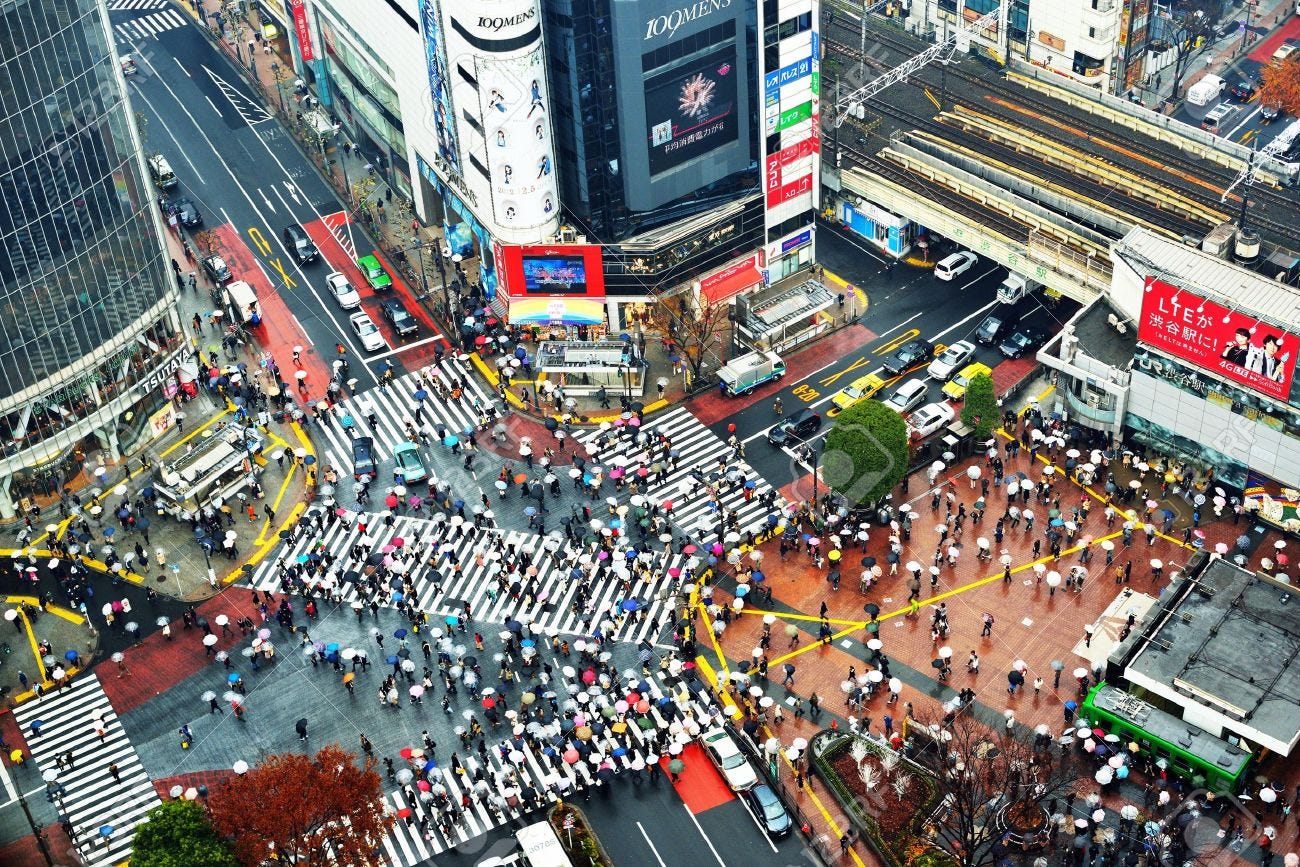
The amount of content pushed to the pedestrians far exceeds what average consumers can take in. But interestingly, what we may consider information overload is an approach that Japanese designers have adopted by choice. One of my Japanese tech-geek friends told me that sometimes designers in Japan deliberately place an overwhelming amount of information for their intended audience to see, predicting that at least one thing out of the many will catch their eye.
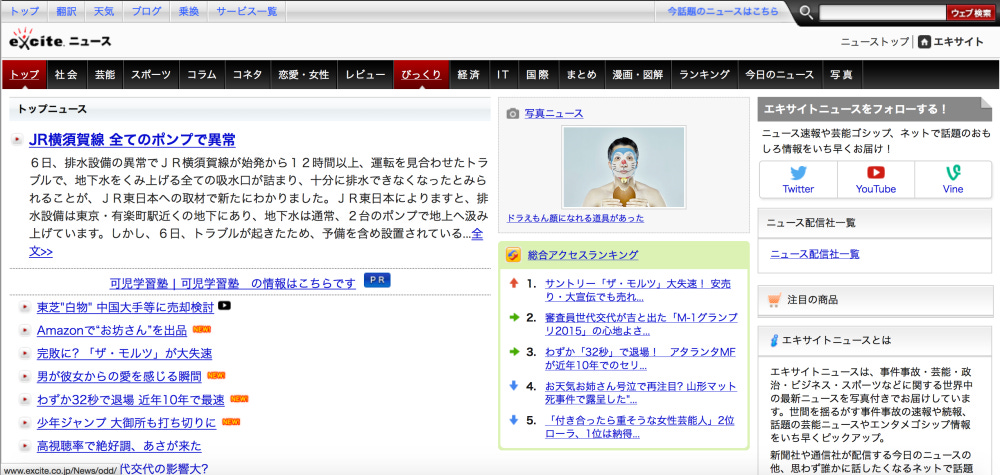
When I attended a hackathon in Tokyo I discovered that this is not only a trend in advertisement, but also web design (for example, see below), and who knows what else!?
On the web, the idea is that they will click on one thing that interests them, and then be led to another page with more information. On the new page, something else will catch their eye, and they will click on that, etc, etc…
(Of course, we also come upon brands like Muji that do the exact opposite: clean, defined, no-nonsense design. So obviously, we can’t generalize.)
But I’m not only talking about billboards and websites today.
Other than all the interesting signs and the flood of information, on the streets of Tokyo, I observed something else intriguing.
There were also advertisements printed inside and outside of vehicles like the trains and buses, but what screamed “Japan” to me were the buses that played music out loud.
The first time that I came across one was when I was walking to the station from work in the Shibuya area. It was around 6 or 7 in the evening, around dinner time when many Japanese workers were also going home. The music was loud and clear, despite the natural noise of urban city centers.
It has been almost two years since I left Japan, but I still remember that the song played was Taylor Swift’s “Shake It Off”.
I remember thinking to myself, “Wow, when an artist breaks into international markets, their advertising strategies are completely different!” It’s not just the message itself that is modified according to geo-location and culture, but also the medium — how it is delivered and how it can be received.
In a busy environment like Tokyo’s city center, it is easy to be distracted, and even easier to become oblivious to advertisement messages. For residents living in Tokyo, all the buzz and fuzz eventually fade into the background. Even for me (I lived there for 4 months), it was hard not to become desensitized to the media. By the end of my second month, I was no longer getting distracted by all the ads around me when I navigated myself around the busiest districts. Simply put, advertisements are no longer noticeable to those who have been living in it.
Thus, advertisers have to stand out from the rest and break out of the background noise zone.
One method of doing so was to break out of the visual, and into the audio. A bus promoting the latest hit track of an album makes perfect sense… Now, there are many other places in cities like Tokyo, where sound is used to attract attention, such as pachinkos, music bars, maid cafes and other niche interest (otaku!) stores. In my opinion, the vehicle works exceptionally well, because it is a moving source of sound, which is active and therefore can stand out from the rest of the sounds as it moves in and out of people’s auditory systems.
That’s enough rambling about musical buses in Japan for the day.
Oh, we probably all know this already, but I didn’t mention it: moving vehicles with music blasting from them is not legal in Canada (or at least most of Canada). However, I have been noticing more and more moving vehicles with LCD advertising screens now, so who knows what we will see in Canada soon!