

What are side quests?
A little over a year ago, I decided to try something new for the entire year of 2024. Or rather, multiple somethings. I wanted to learn or do one thing each month. And for a few reasons:
I wanted to get unstuck. In the back of my mind, I had a running list of unwritten ideas and things I wanted to pursue. Some were more fleshed out than others, but the sheer volume often overwhelmed me to the point of paralysis and inaction.
I wanted to build a habit of trying something without overthinking. I tend to struggle with commitment. When I look at an idea, I often get too serious about it. It feels like it has to be the one—the right thing that deserves my limited time and energy. But often, the idea needs more exploration before I can tell if it’s worth pursuing.
And that brings me to the last reason: I wanted to figure out what’s worth pursuing. If I listed every idea I wanted to explore, there’d probably be hundreds.
I named these monthly projects, hobbies, and initiatives “side quests.” I was inspired by adventure video games, where players can embark on optional missions between the main tasks that advance the story. As a player, I always enjoyed side quests for their more casual nature.
Naming them "side quests” also helped me keep the perspective that these endeavours don’t need to take over my life—not yet, anyway. Not when I’m not actively choosing to make them a central part of my story.
What did I learn?
1. Knowing my “why”
Before the year began, I spent a lot of time reflecting on how to approach my side quests in a way that would set me up for success. By this point, I knew myself well—thanks to therapy and self-learning in psychology and mental health care. I knew that without the right amount of structure, I was prone to abandon things. But I also knew that too much structure would overwhelm me and lead to burnout.
I borrowed the idea of a “pre-mortem” from the business world. This is where you envision potential failure ahead of time, so you can plan accordingly. What I ended up creating was a one-pager at the start of each month before embarking on a quest, and another one-pager for reflection at the end of the month.
This lightweight structure proved invaluable as the months went on, especially when the novelty of the new year started to fade. It’s not easy for me to stick with a project or hobby; my motivation waxes and wanes, and there are always shiny new things competing for my attention. But revisiting my “why” every month helped me stay focused on the long-term goal.
For me, this looks like a bullet-point list in my start-of-month one-pager, such as this. “Why do I really want to do the damn thing?”
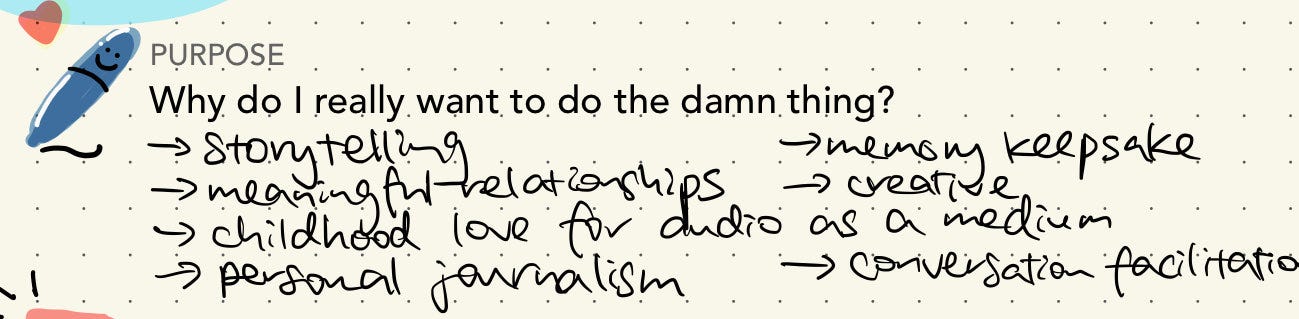
2. Anticipating obstacles
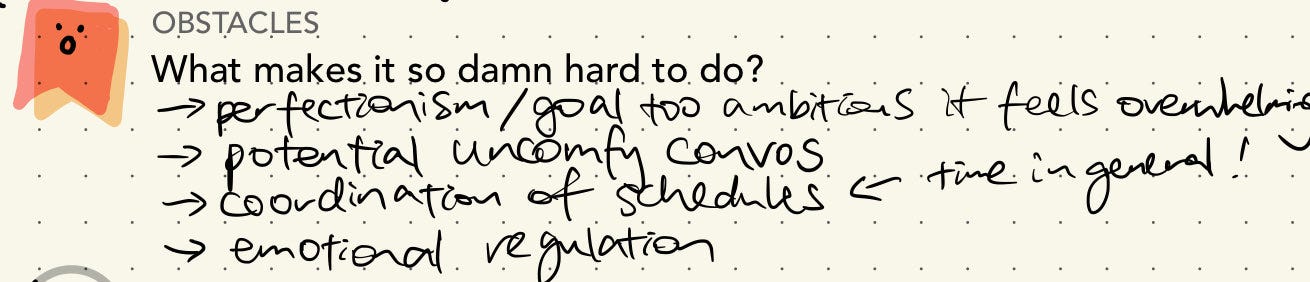
After reflecting on the “why” at the start of each month, I also found it helpful to sit down and list any barriers or obstacles before diving into the project or hobby. This gave me a realistic understanding of what to watch out for as I worked on something—especially when it was something brand new.
Of course, not everything can be anticipated (And if it could, it would lose its fun). But the goal of anticipating obstacles is to identify potential challenges in advance so that I’m not caught off guard. In the process, I feel empowered because I can already see potential issues from a mile away.
Another way to think about it is: “What excuses might I come up with to avoid doing this in two weeks?” Or, “What makes it so damn hard to do?”
3. Get outta my own damn way
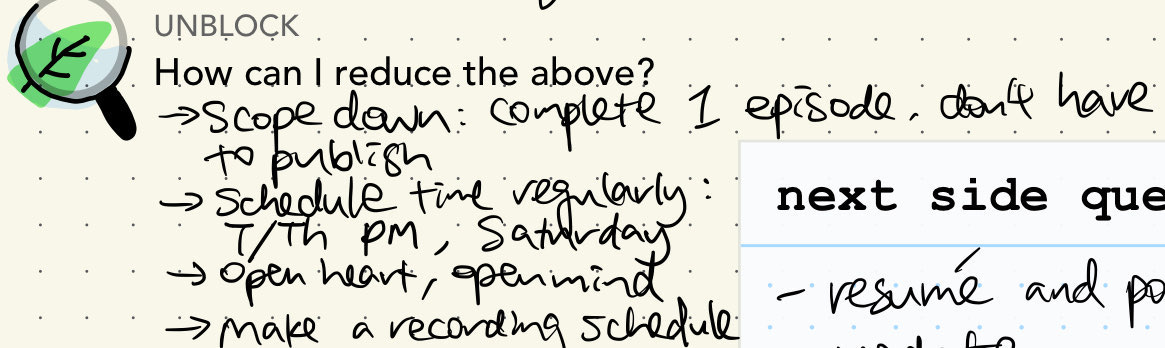
Now that I have a clearer understanding of why I want to do something and what obstacles might make it difficult, I ask myself, “How can I reduce the above (obstacles)?”
For example, for nearly all of my side quests, “lack of time” was a potential obstacle. I mitigated this by setting a schedule for myself in advance, so I wouldn’t be at the mercy of fluctuating motivation.
It didn’t always work. I learned the hard way that two weeknights and one weekend day per week were unsustainable for my mental health, even when I loved the project I was working on. But this exercise helped reduce—not eliminate—the risks. It’s all about balance. Flexibility is also key—if something isn’t working, I need to be willing to adjust my approach.
4. A roofshot goal that would make me proud
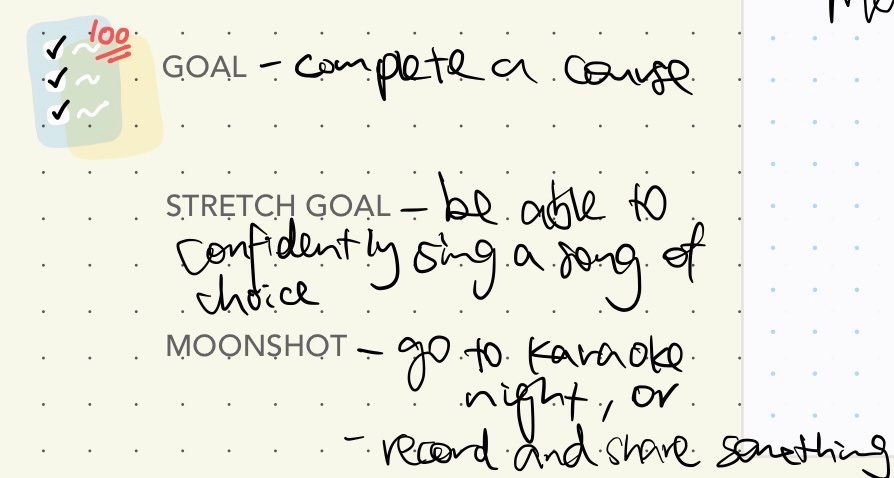
I have a history of burnout from overly ambitious goal-setting. So when I started my side quests a year ago, I built in the process of working backwards from a big moonshot goal—something that’s often huge and intimidating—to find a roofshot goal. To me, a roofshot goal needs to pass two criteria: It needs to feel both attainable and still be meaningful, something I could realistically achieve but would still make me proud.
For example, instead of designing, building, and sharing a prototype online (moonshot), my stretch goal was to design, build, and share it with 2-3 people. My roofshot goal was to conduct 2-3 user interviews and design a prototype.
5. Always be a beginner at something
Looking back at a full year of trying things old and new, with each quest lasting one month, the biggest lesson I learned was humility. It can be tempting to avoid doing things I’m not already good at, finding excuses along the way—That takes too much time. I don’t like it that much anyway. So many people are better suited for this.
But applying myself anyway, especially when it’s embarrassing, awkward, and hard, is a humbling experience. It reminds me to stay curious and renews my passion for learning for learning’s sake.
No matter where I go from here, I think I will always strive to be a beginner at something. It keeps me hungry, humble, and engaged with the magic all around me. Plus, once I embraced humility, it was a lot of fun to stumble around and find my way.
My 2024 side quests
One day, I’ll put together a highlight reel walking through my 2024 side quests. In the meantime, here’s a quick list of what I worked on:
🎙️January: Podcast
👩🏻💼February: Design portfolio
👩🏻🎤March: Singing (Screaming, more precisely)
💚April: Mental health tech research and development
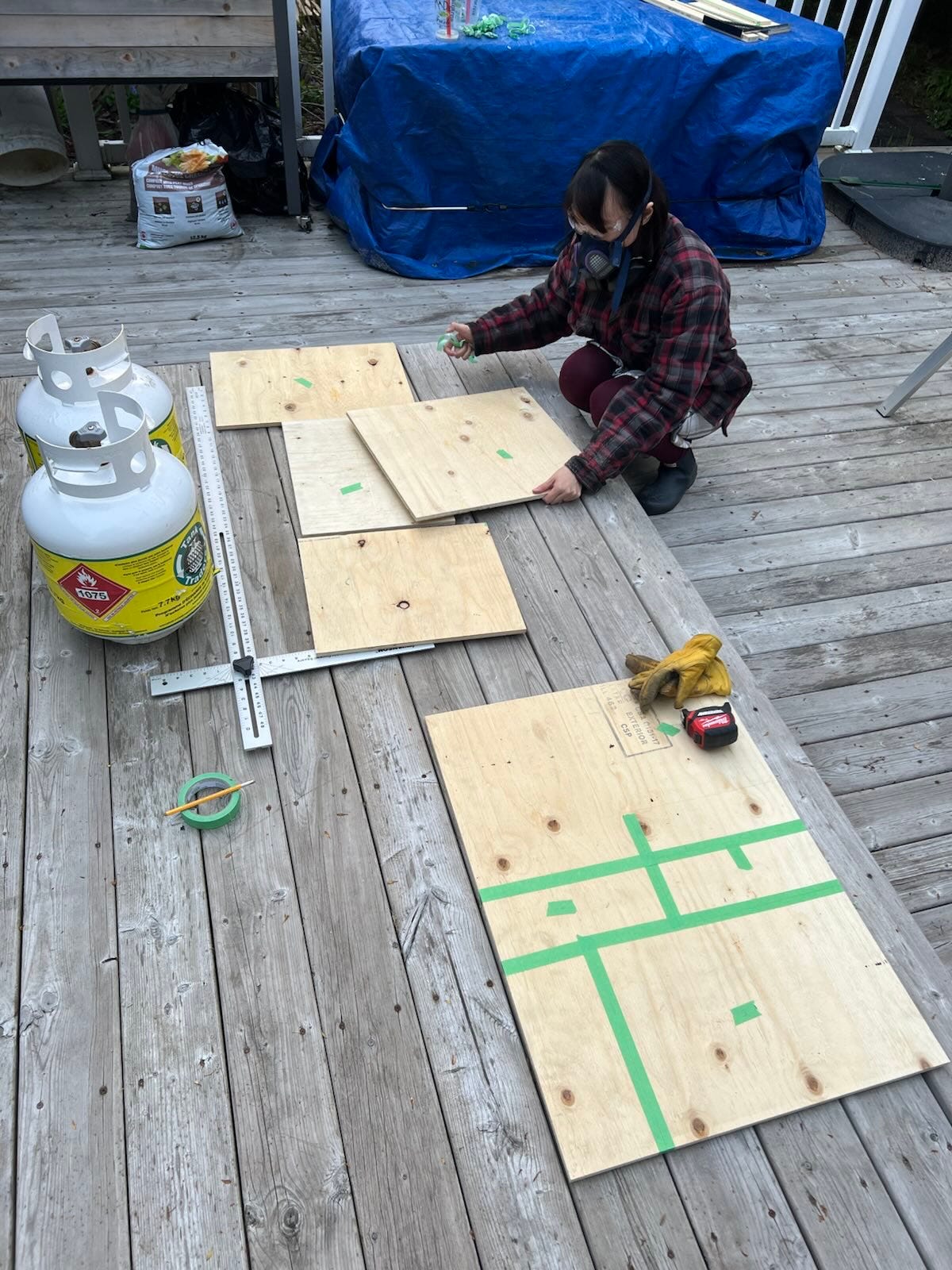
📚May: Little Free Library design and construction
🤖June: Prompt engineering learning
🏊🏻♀️🏃🏻♀️July and August: Swimming and Running
September — skipped due to out-of-country vacation
👩🏻🍳October: Chinese cuisine
✍🏻November: Daily writing practice
🎬December: Digital animation
In 2025, I’ll be stepping away from side quests. While I’ve cherished exploring new projects and hobbies, this coming year is about a pivot toward focus.
That doesn’t mean I’m done learning or trying new things—I’ll always want to stay a beginner at something. I’ll be picking up the ukulele in a few weeks! But now, I’m longing for endeavours with a longer horizon—where I can invest my energy into fewer, deeper, and more meaningful things.
In many ways, the side quests have been preparing me for this shift. They’ve taught me to embrace novelty, lean into experimentation, and uncover what truly drives me. Now, it’s time to take those lessons forward—honing in on what matters most, with greater intention and alignment with my long-term vision.